The Last Judgement is a podcast that invites late artists, writers, and cultural figures to reflect on an artwork, the process of making art, and art's place in the world. Each episode features a posthumous monologue delivered in the voice of someone who influenced the work.
Extending my exploration of artifice into the realm of voice, narrative, and performance, this ongoing podcast series conjures deceased artists and thinkers to critique the work of the living, reviving voices from art history through the synthetic means of script, sound design, and AI-generated speech.
Extending my exploration of artifice into the realm of voice, narrative, and performance, this ongoing podcast series conjures deceased artists and thinkers to critique the work of the living, reviving voices from art history through the synthetic means of script, sound design, and AI-generated speech.
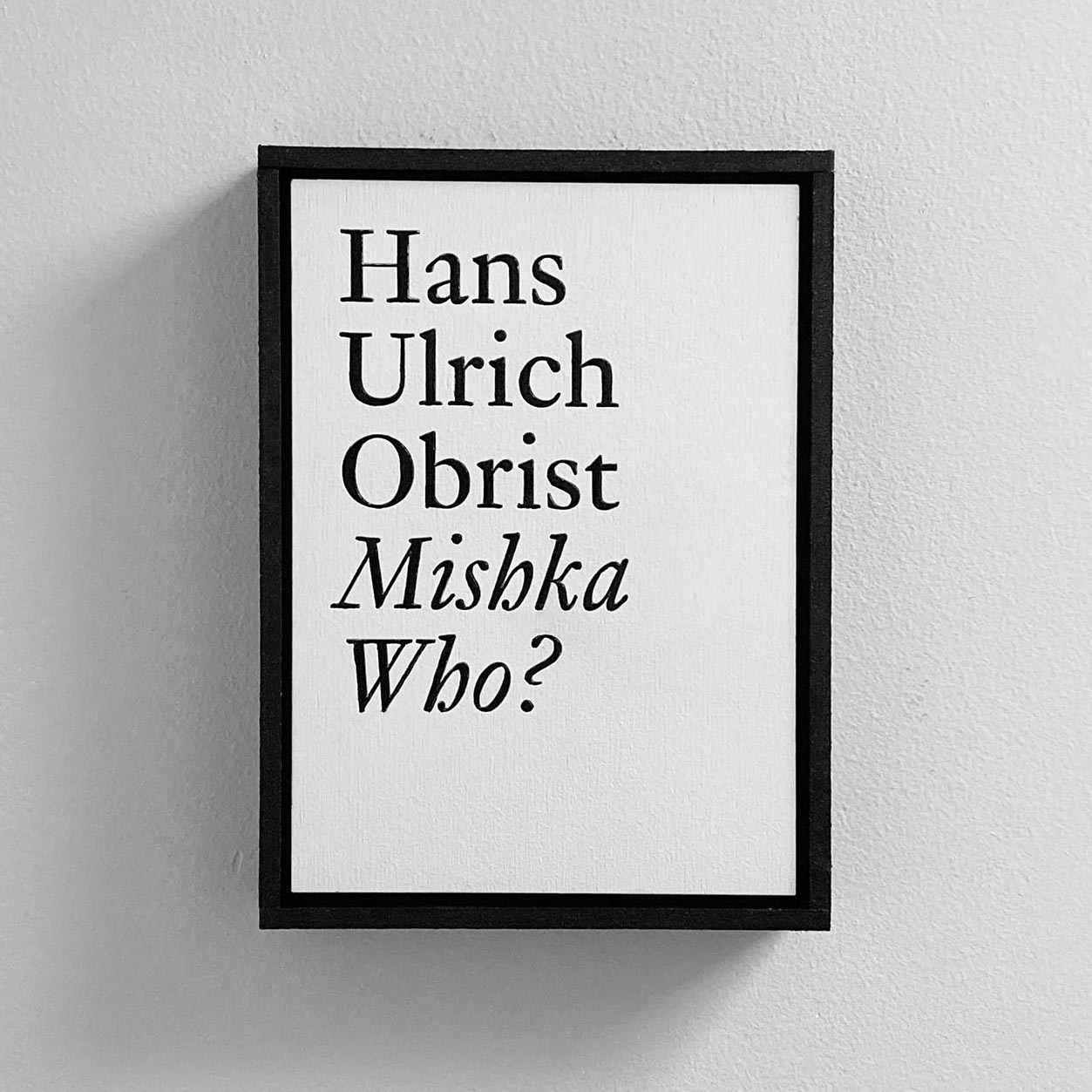
Episode 1: Mishka Who?
Listen on Spotify or here:
A question overheard at an exhibition. A name spoken, then forgotten. A painting made in response—not as a rebuttal, but as an echo.
In this first episode of The Last Judgement, we reflect on Mishka Who?, a painted monograph with no content—just a title and a format, pretending to be part of an established archive. A book that can’t be opened. A name that can’t quite be placed. A legacy suggested, but never confirmed.
To consider the work, I summon the voice of Marcel Broodthaers: poet, conceptual provocateur, and master of formal mimicry. Speaking posthumously, Broodthaers guides us through the object’s surface and structure with dry clarity and quiet affection.
He notes that the book has presence but no substance. That its form is enough to persuade. That legacy, more often than not, is simply well-executed formatting. The title—Mishka Who?—becomes a meditation on near-recognition, almost-legitimacy, and the strange freedom of being misremembered.
This isn’t a biography or a critique in the traditional sense. It’s something in between. A work returned to the world through the lens of someone it never met, but always felt close.
And in this brief encounter across time, we’re reminded that the index is never complete. Meaning isn’t always earned, it’s often designed. And sometimes, the question is the most precise form a name can take.
Listen on Spotify or here:
A question overheard at an exhibition. A name spoken, then forgotten. A painting made in response—not as a rebuttal, but as an echo.
In this first episode of The Last Judgement, we reflect on Mishka Who?, a painted monograph with no content—just a title and a format, pretending to be part of an established archive. A book that can’t be opened. A name that can’t quite be placed. A legacy suggested, but never confirmed.
To consider the work, I summon the voice of Marcel Broodthaers: poet, conceptual provocateur, and master of formal mimicry. Speaking posthumously, Broodthaers guides us through the object’s surface and structure with dry clarity and quiet affection.
He notes that the book has presence but no substance. That its form is enough to persuade. That legacy, more often than not, is simply well-executed formatting. The title—Mishka Who?—becomes a meditation on near-recognition, almost-legitimacy, and the strange freedom of being misremembered.
This isn’t a biography or a critique in the traditional sense. It’s something in between. A work returned to the world through the lens of someone it never met, but always felt close.
And in this brief encounter across time, we’re reminded that the index is never complete. Meaning isn’t always earned, it’s often designed. And sometimes, the question is the most precise form a name can take.